Author: The CometSMS Insight Team
Date: October 25, 2025
Disclaimer: This article is for informational and educational purposes only and does not constitute financial, investment, or legal advice. Always conduct your own research before making any investment decisions.
Introduction: The Convergence of Two Revolutions
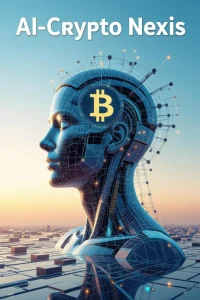
The 21st century has been defined by two seismic technological shifts: the decentralized trust of Cryptocurrency (Blockchain) and the algorithmic intelligence of Artificial Intelligence (AI). For years, these two forces developed largely in parallel. Today, they are converging, creating a powerful nexus poised to revolutionize financial markets, security, and the very structure of decentralized governance.
This synergy is not merely about using AI to trade Bitcoin faster. It represents a fundamental reshaping of the crypto ecosystem, promising unprecedented levels of efficiency, security, and complexity. The integration of AI is set to redefine everything from how we invest and secure our assets to how we build and manage decentralized autonomous organizations (DAOs). Understanding this confluence is crucial, as the future of digital finance will inevitably be governed by intelligent algorithms.
I. The AI Advantage in Trading and Investment
The most visible and immediately impactful role of AI in the crypto world is its application in financial decision-making and automated trading.
A. Algorithmic Edge in Volatility
Cryptocurrency markets are notorious for their extreme volatility, often driven by sentiment, social media, and macroeconomic news. Traditional human analysis struggles to process this firehose of data in real-time. AI, powered by deep learning and natural language processing (NLP), excels here:
- Sentiment Analysis: AI models can continuously scan billions of tweets, news articles, regulatory announcements, and forum discussions (like Reddit and Discord) to gauge market sentiment instantly. This allows AI trading bots to execute trades faster than human traders, reacting to market shifts before they become widespread trends.
- Predictive Modeling: Unlike traditional trading algorithms that rely on simple historical prices, AI can integrate complex, non-linear data sets—such as on-chain data (transaction volume, network activity), global economic indicators, and even energy consumption patterns—to generate highly accurate, short-term price forecasts. This moves trading from a probabilistic gamble to a data-driven science.
B. Personalized and Decentralized Portfolio Management
The advent of AI allows for the creation of sophisticated, bespoke investment strategies accessible to the average investor:
- Risk Management: AI can automatically adjust portfolio allocations based on an individual’s real-time risk tolerance and market conditions, moving assets between stablecoins, major cryptos, and yield-generating protocols to optimize returns while minimizing unforeseen losses.
- Yield Optimization: Smart AI agents are now being developed to navigate the complex landscape of decentralized finance (DeFi), automatically seeking the highest, safest yield farming opportunities across different protocols, a task far too time-consuming and risky for manual management.
II. Revolutionizing Blockchain Infrastructure and Security
The integration of AI extends beyond trading; it is enhancing the core security, efficiency, and sustainability of the blockchain itself.
A. Enhanced Cybersecurity and Threat Detection
The immutable nature of the blockchain makes security paramount, yet smart contracts and network endpoints remain vulnerable. AI is being deployed as the first line of defense:
- Smart Contract Auditing: AI tools can scan millions of lines of smart contract code instantly to detect subtle logical flaws, re-entrancy bugs, or vulnerabilities that human auditors might miss. This dramatically reduces the risk of multi-million dollar exploits.
- Anomaly Detection: On-chain AI monitors transaction streams in real-time, identifying unusual patterns indicative of money laundering, “rug pulls,” or flash loan attacks. This proactive defense is vital for maintaining the integrity and trust of decentralized ledgers.
B. Solving Blockchain Scalability and Energy Efficiency
The core challenge for major blockchains (like Ethereum) is scalability. AI offers solutions for optimizing network performance:
- Dynamic Resource Allocation: AI can dynamically adjust gas fees and block sizes based on real-time network congestion, leading to smoother, faster, and cheaper transaction processing.
- Proof-of-Stake Optimization: For energy-efficient systems, AI can help validators select the most optimal staking pools and strategies, improving network stability and democratizing the validation process.
III. The Future of Governance: Decentralized Autonomous Organizations (DAOs)
Perhaps the most profound impact of the AI-Crypto nexus will be on the future of decentralized governance. Decentralized Autonomous Organizations (DAOs) rely on community consensus, which can be slow, complex, and prone to “whale” influence (large holders).
A. AI-Assisted Governance and Proposal Drafting
AI can act as an impartial, hyper-efficient layer within DAOs:
- Proposal Summarization and Impact Forecasting: AI can analyze lengthy, complex governance proposals, summarize their key implications, and even model the potential long-term financial or technical impact of passing the vote. This allows token holders to make informed decisions quickly.
- “AI Delegates”: The future may see sophisticated AI systems delegated voting power, particularly for highly technical or frequent votes. These AI delegates could vote autonomously based on the predefined goals of the DAO or the interests of the token holder they represent, ensuring consistent, rational governance.
B. Ensuring True Decentralization
AI can also be deployed to monitor and report on potential centralization threats, such as collusion between mining pools or undue influence by major stakeholders, ensuring that the DAO remains truly decentralized and resistant to single points of failure.
IV. Ethical Challenges and the Road Ahead (1000+ Words)
While the fusion of AI and crypto promises unprecedented innovation, it introduces new, complex challenges:
- Algorithmic Dominance: As AI takes over trading and DeFi strategy, the market risks becoming dominated by a few powerful algorithms. This could lead to flash crashes, “algos vs. algos” wars, and less space for human intervention or critical thinking.
- Transparency and Auditability: The decision-making process of AI models (the “black box” problem) clashes with the core ethos of transparency in the blockchain world. Regulators and users will demand clear, auditable explanations for AI-driven transactions.
- Security Threats: While AI strengthens defense, AI-powered hacking tools will become exponentially more sophisticated, demanding a constant arms race in security technology.
Conclusion: The Augmented Asset Manager
The combination of AI and cryptocurrency is not a fleeting trend; it is the inevitable evolution of digital finance. AI provides the speed and intelligence that decentralized systems need to scale, secure, and govern themselves effectively.
The primary prediction is clear: the crypto world will become too complex, too fast-moving, and too data-intensive for unassisted human management. Success in the next decade will belong to the Augmented Asset Manager—the individual or entity that effectively commands and oversees sophisticated AI tools, leveraging algorithmic intelligence to achieve financial freedom and contribute to a more robust, secure, and democratic decentralized internet.
